

We provide specialized winterization services to safeguard your pool during the off-season, and when spring arrives, we handle the thorough opening process.
Recent Posts


Sign Up to get updates & news about us . Get Latest Deals from Walker's Inbox to our mail address.
Sign Up to get updates & news about us . Get Latest Deals from Walker's Inbox to our mail address.
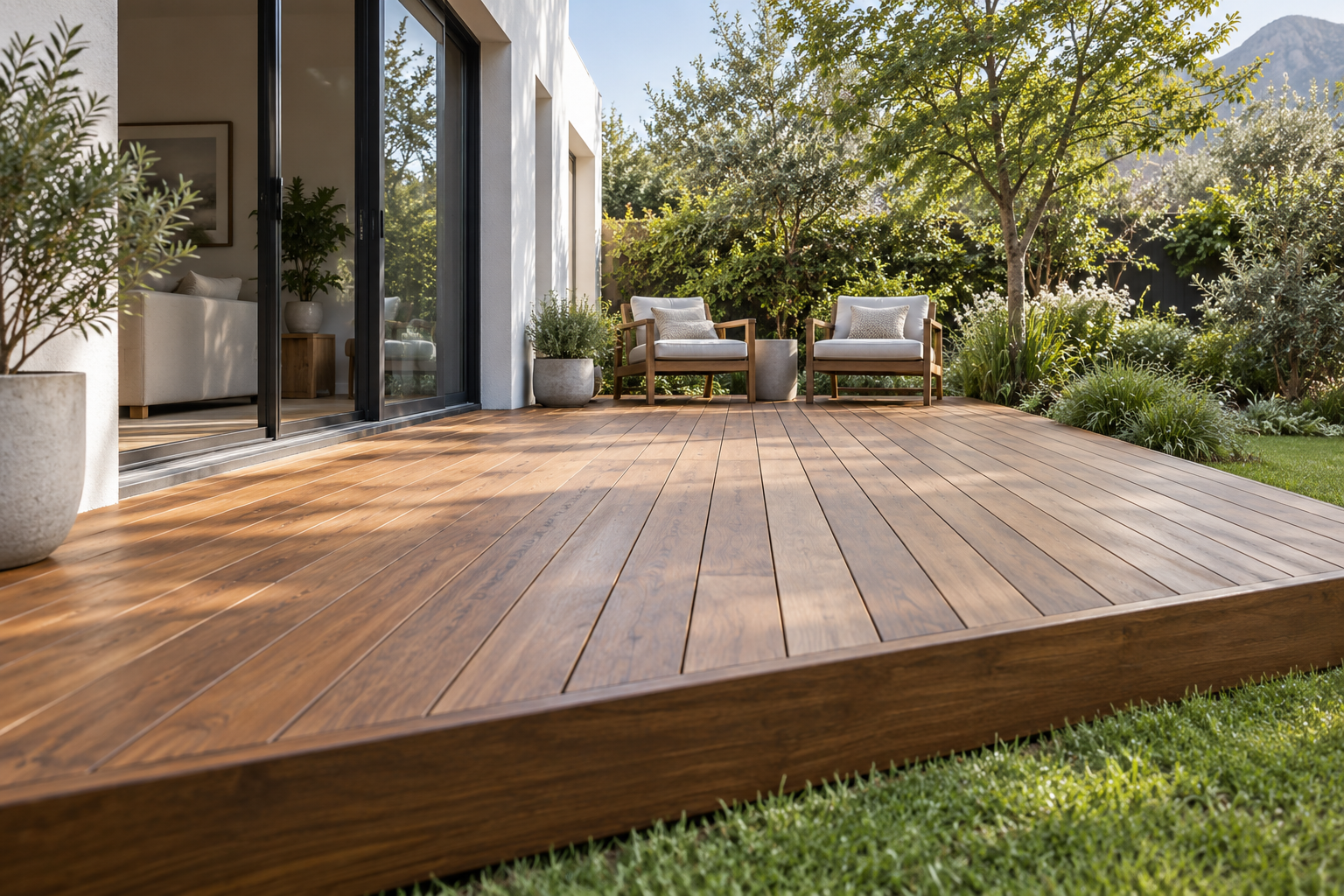
Create an outdoor space for everyday living with wooden decking from Premium Decking. We install timber decks in Cape Town and surrounding areas, with Balau, Garapa and Massaranduba options for patios, gardens and entertainment areas.
A wooden deck can turn the space outside your doors into somewhere you use throughout the day. It might provide room for a dining table beside the kitchen, a quieter seating area in the garden, or a more comfortable connection between the house and the pool.
The layout starts with how you want to use that space. A dining area needs enough room to move chairs without blocking the route indoors. A narrow deck beside the house may need a clear walkway, while a larger entertainment deck can accommodate separate places for cooking, eating and relaxing. Planning these details early helps you choose useful dimensions before committing to a timber quantity.
Premium Decking provides wooden decking installation for these different settings. We consider the relationship between the deck, the building and the surrounding ground, including where people enter, walk and gather. Steps, edges and changes in level belong in that discussion from the beginning.
For a deck around a swimming pool, the connection with the pool edge and access for ongoing pool care need particular attention. Our pool decking service covers those requirements in more detail. A pergola can also be considered alongside the deck where an overhead structure forms part of the outdoor space you want to create.
Complete the form below and Premium Decking will get back to you.
The timber you choose affects the appearance of the deck, its installation requirements and how you care for it. Premium Decking offers Balau, Garapa and Massaranduba decking, giving you a choice of hardwoods to consider against the setting and your preferred finish.
Compare physical samples wherever possible. Natural timber varies between boards, and a small photograph may not show how a larger finished surface will look beside your walls, paving or garden. Ask about the board profile, available lengths and proposed finish together, as these details influence both the appearance and the quotation.
Balau is a hardwood used for external decking. It is an option to consider for a timber patio, garden deck or entertainment area where you want the character of real wood. When comparing a Balau deck with the other options, look at the actual boards and finish proposed for your project. The specification should also account for the supporting structure, fixings and conditions beneath the deck.
Garapa typically has golden to yellowish-brown colouring, making it worth considering when you prefer a lighter timber appearance. Check a finished sample against the surrounding surfaces, especially if the deck will sit beside pale paving or large glazed doors. Timber colour changes with exposure and care, so the appearance you want to maintain should form part of the finishing discussion.
Massaranduba offers a richer reddish-brown appearance and is a dense hardwood used for decking. It can provide a stronger visual contrast against lighter walls and paving. Its density also makes the installation specification important, including how boards are cut and fixed. Choose it with both the finished look and the practical requirements of the project in mind.
If you are comparing real timber with manufactured boards, our composite decking service provides another option to explore. The choice should account for appearance, initial cost and the amount of ongoing care you are comfortable with.
A deck needs to work with the site beneath it. A surface close to existing paving presents different questions from a raised platform over uneven ground. The height available below doors, the condition of existing supports and the route water takes through the area all affect the installation.
Drainage and ventilation deserve attention before boards cover the supporting work. Water needs a suitable route away, and the space below the deck must be considered alongside the finished surface. Existing drains, inspection points and other services may also need continued access once the deck is complete.
Exposure varies between properties. An open coastal deck, a sunny courtyard and a sheltered garden can place different demands on timber and finishes. We consider the actual position of the deck, including shade, wet areas and surrounding surfaces, when discussing the work.
Where the layout includes steps or raised edges, these should be planned with the deck itself. Wooden balustrades may form part of the project, depending on the setting and applicable requirements. Working space and material access also matter, particularly when boards and supporting materials must pass through the house or a restricted side entrance.
If your existing deck no longer provides the space you need, an extension can be considered alongside replacement. You may want a larger dining area, room for loungers or a better connection to another part of the garden. Start with the extra space you want to use and how people will move between the old and new areas.
The retained deck needs assessment before additional work is planned. Its condition, levels and supporting arrangement affect how an extension can meet it. New boards may also differ from weathered timber in colour and appearance, so discuss the junction and finish rather than assuming the addition will be an exact match.
Where replacement is the more suitable option, agree how much of the existing deck will be removed and what can be retained after assessment. Replacing the deck can also provide an opportunity to change its footprint, steps or access. The quotation should distinguish removal, retained work and the new installation.
Built-in seating can give a deck a permanent place to sit while keeping its layout organised. Plan the bench position around the way you use the space, including access to tables, room to pass and the routes between doors and steps. Consider whether fixed seating will work better for you than furniture that can be moved.
Custom wooden planters can be included as part of the deck project to introduce planting or define different areas. Their size and position should work with the seating, views and available walking space. Allow for access to look after the plants and clean the surrounding deck.
Seating supports and the weight of filled planters need to be considered with the deck structure. Planter drainage and access for timber care also deserve attention before the details are agreed. Include these features in the initial brief so their construction, finish and cost form a clear part of the quotation.
Complete the form below and Premium Decking will get back to you.
The cost of a wooden deck depends on more than the size of the visible surface. Timber choice, board dimensions, the supporting structure and the amount of work needed beneath the deck all contribute to the project price.
A straightforward layout over accessible ground will differ from a raised deck with steps, multiple levels or a complicated outline. Edges, openings around existing features and the arrangement of boards can affect cutting and material use. Balustrades, pergolas and built-in seating should be identified clearly so you can see how they contribute to the quotation.
When comparing wooden decking prices, check what each quotation includes. A price for boards alone is different from a price covering supporting materials, fixings, installation and finishing. For replacement work, removal of the old deck and the condition of the remaining supports also need to be considered.
Premium Decking prepares quotations around the proposed work and the property. Agreeing on the timber, layout and included features gives you a clearer basis for comparing options and deciding where to spend your budget.
Ongoing care is part of choosing a wooden deck. The right cleaning and finishing approach depends on the timber, the product applied to it and the conditions in which the deck is used.
Keep the surface clear of accumulated dirt and leaves, and pay attention to places where moisture collects. Planters, furniture and nearby planting can make some areas harder to clean or slower to dry. Use cleaning methods suited to the timber and finish, following the product guidance rather than assuming every outdoor cleaning treatment is suitable.
The need for recoating should be assessed against the condition of the surface and the finish manufacturer’s recommendations. A heavily exposed area may need different attention from a sheltered section of the same deck. Checking for loose boards, damaged fixings and changes in the supporting structure can help identify work that needs attention beyond the surface finish.
Premium Decking also provides decking repairs and maintenance, including the relevant cleaning, sanding, sealing and oiling work. If you already have a deck, its condition can help determine whether maintenance, repair or replacement is the more suitable next step.
We install wooden decking across Cape Town and surrounding areas, including the Cape Town CBD, the V&A Waterfront, Green Point, Sea Point, Fresnaye, Bantry Bay, Clifton, Camps Bay, Bakoven and Llandudno. In the Southern Suburbs, we cover Rondebosch, Newlands, Claremont, Bishopscourt, Constantia, Tokai and Steenberg. We also serve Hout Bay, Noordhoek, Kommetjie, Muizenberg, Fish Hoek, Milnerton, Table View and Bloubergstrand.
We also install wooden decking in surrounding areas including Goodwood, Parow, Bellville, Durbanville, Brackenfell, Kraaifontein, Kuils River, Eerste River, Somerset West, Strand, Gordon’s Bay, Melkbosstrand, Atlantis, Stellenbosch, Paarl, Franschhoek, Wellington, Malmesbury, Darling, Yzerfontein, the Grabouw and Elgin Valley area, Rooi-Els and Pringle Bay.
Complete the form below and Premium Decking will get back to you.