



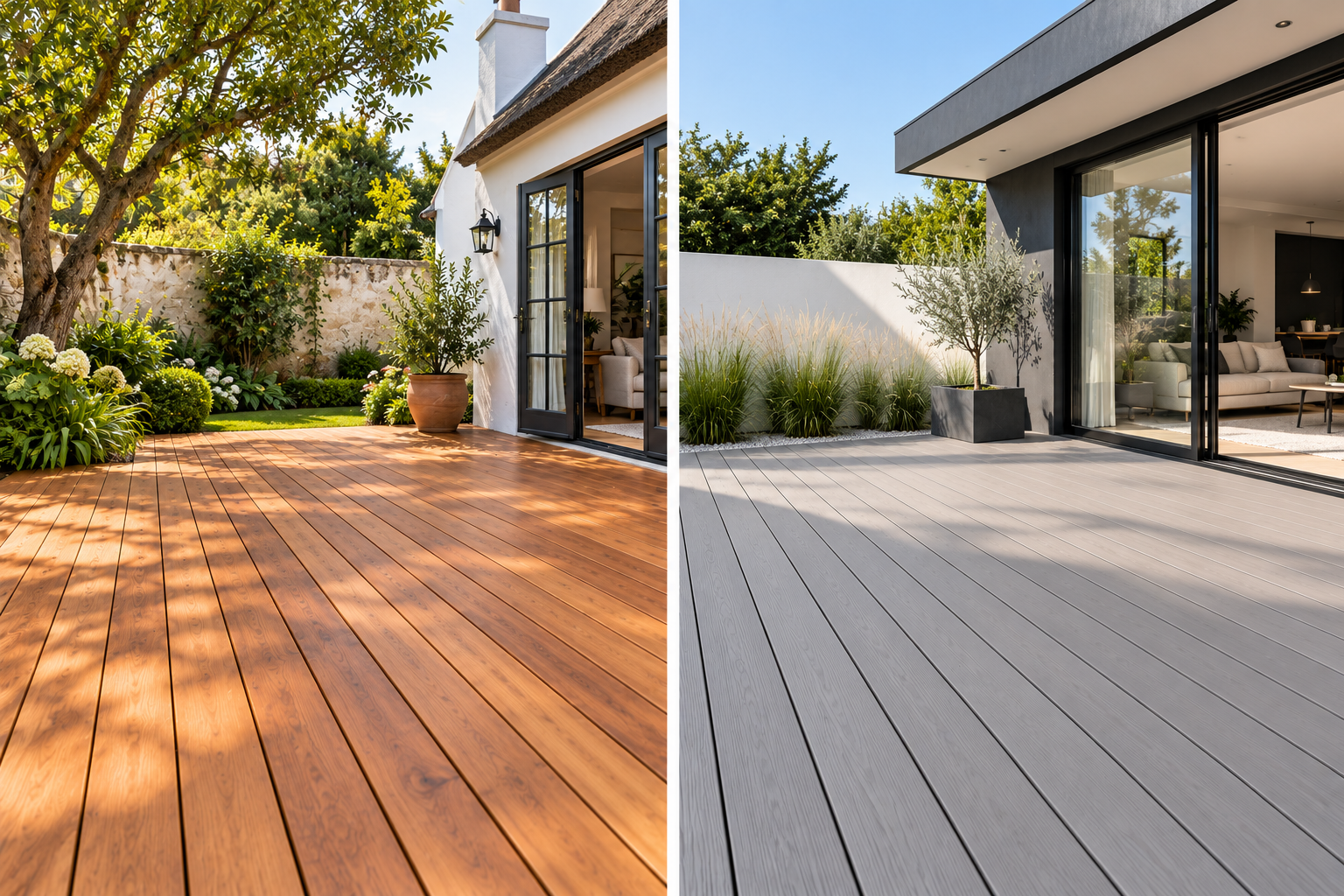
Timber and composite decking can both create a welcoming space for outdoor meals, quiet mornings or time beside the pool. The better choice depends on the finish you enjoy, the care you are willing to undertake and the conditions around your home.
Natural timber offers individual grain patterns and colour variation. Composite offers manufactured board options that generally reduce the need for sanding and recoating, although they still need cleaning. For a Cape Town home, sun exposure, winter rain and coastal conditions also deserve attention before you choose.
Discuss Your Decking Options
Complete the form below and Premium Decking will get back to you to discuss your outdoor space.
Timber and Composite Decking at a Glance
Timber decking uses natural wooden boards. Premium Decking’s hardwood options include Balau, Garapa and Massaranduba, each with its own appearance and characteristics. Composite decking uses manufactured boards combining plant fibres with polymers, with composition and surface finishes varying between products.
Both need a suitable supporting structure. Changing the surface material does not remove the need for drainage, ventilation or correct installation.
| Consideration | Timber decking | Composite decking |
|---|---|---|
| Appearance | Natural grain and variation between boards | Manufactured colours and textures, often with a more consistent appearance |
| Routine care | Cleaning and periodic attention to the chosen finish | Cleaning according to the board manufacturer’s instructions |
| Refinishing | Suitable timber can often be sanded and refinished | Sanding and recoating may be unsuitable, particularly for capped boards |
| Cost | Depends on species, board sizes, structure and installation | Depends on product range, board profile, structure and installation |
| Sun and wet conditions | Performance depends on the timber, finish, exposure and care | Performance depends on the specific product, colour, exposure and care |
Natural Timber Character or a More Consistent Finish?
If natural variation is part of the appeal, wooden decking is worth considering. Grain patterns and differences in tone give the finished deck character. Balau, Garapa and Massaranduba offer different starting colours, but their appearance will also be influenced by the finish and exposure.
Timber changes over time. Depending on its treatment and conditions, it may develop a greyer, weathered appearance. Keeping a particular colour usually involves more attention to the finish than accepting natural colour change. Greying alone does not tell you whether the supporting structure is sound.
Composite may suit you if you prefer a more consistent colour scheme or a particular manufactured texture. Compare physical samples with your paving, exterior walls and furniture. Look at the board ends and edges too, since these details affect how steps and exposed sides will appear.
How Much Maintenance Are You Willing to Take On?
Timber needs regular cleaning and checks for loose fixings, damaged boards and changes in its finish. Depending on the timber and coating, ongoing timber deck maintenance may include sanding, oiling or resealing. The right interval depends on the product, exposure and condition, rather than one timetable for every deck.
Consider how that work fits into your household. A large deck with furniture, planters and stairs takes more preparation to clean and refinish than a small, open seating platform. If you plan to pay for maintenance, allow for that expense when comparing options.
Composite generally avoids the regular sanding and recoating associated with maintaining a finished timber surface. It still needs leaves, dirt, food spills and other debris removed. Shaded or damp areas also need attention, and the correct cleaning method depends on the selected board.
Damage needs a different approach too. Some timber marks can be addressed through suitable refinishing. A damaged composite board may need replacement, especially where sanding would harm its protective surface. Ask about replacement-board availability before choosing a range.
Discuss Your Decking Options
Complete the form below and Premium Decking will get back to you to discuss your outdoor space.
Compare the Complete Cost, Not Just the Boards
Comparing the price of a timber board with a composite board gives only part of the picture. An installed deck also includes supports, fixings, edge details, labour and any preparation needed beneath it. Removing an old deck, working around awkward access or adding stairs and balustrades can change the total substantially.
The materials being compared matter. A lower-cost timber option and a premium composite range tell a different story from a particular hardwood compared with an entry-level composite. Neither material is automatically cheaper across every project.
Request quotations for the same size, layout and features. Check whether they include the supporting structure, removal work and any initial timber finishing. Then consider likely cleaning, refinishing and repair costs alongside the installation price. A lower starting price is useful only if the ongoing responsibilities also suit you.
Sun, Winter Rain and Coastal Exposure in Cape Town
Start with the conditions at the proposed deck, rather than treating every Cape Town property alike. A shaded garden deck may stay damp longer after rain, while an exposed terrace may receive strong afternoon sun. A property near the sea also needs suitable detailing and fixings for its exposure.
Both timber and composite surfaces can become hot in direct sunlight. With composite, colour and product design influence surface temperature; darker boards can absorb more heat than lighter options. View samples in conditions similar to your outdoor space and consider where shade would make the deck more comfortable.
Rainwater needs somewhere to go. Board spacing, drainage below the deck and airflow around the structure all matter. Composite is not a solution for a poorly drained base, and a durable hardwood cannot compensate for water continually trapped around unsuitable supports.
Compare product information and installation requirements alongside appearance. The boards, supporting structure and fixings need to work together for the particular site.
What Changes Around a Pool or on an Existing Deck?
For pool decking, think about wet feet, cleaning, splashes and the temperature of exposed surfaces. Neither the word “timber” nor “composite” guarantees how a finished deck will perform when wet. The specified surface, its condition and the way water drains are all relevant.
Consider how the deck meets the pool edge and whether equipment remains accessible. The design should also allow for the selected material’s movement and the space available around the pool.
If you are replacing existing boards, have the frame checked before choosing the new surface. Joist spacing, support condition and fixing requirements may differ between products. A structure that supported an old timber deck is not automatically suitable for composite boards, and new boards will not resolve damage underneath.
Discuss Your Decking Options
Complete the form below and Premium Decking will get back to you to discuss your outdoor space.
When Timber May Suit Your Home
Timber is a strong option if you value natural grain, variation and the character of real wood. It may also appeal if you want a surface that can, where its condition allows, be sanded and refinished later.
The choice makes most sense when you are comfortable with its care requirements. That might mean looking after a smaller deck yourself or budgeting for professional maintenance. Choose the timber and finish together, with a clear understanding of how you want the deck to look as it ages.
For a deck that forms part of a wider outdoor project, discuss how the timber will relate to stairs, seating, screens and other wooden features. The finished space should feel considered as a whole.
When Composite May Suit Your Home
Composite may be the more convenient choice if reducing regular finishing work is a priority. It can also suit a design where a consistent colour and manufactured board profile are important.
Choose a specific product rather than relying on the general label. Ask about cleaning, surface heat, movement allowances, stain resistance, replacement boards and warranty conditions. A long product warranty does not remove the need for correct installation and care.
The final decision should balance the appearance you prefer with the upkeep you will realistically manage. Premium Decking provides timber and composite decking across Cape Town and surrounding areas, helping you consider the material, layout and supporting work together.
Comments are closed